
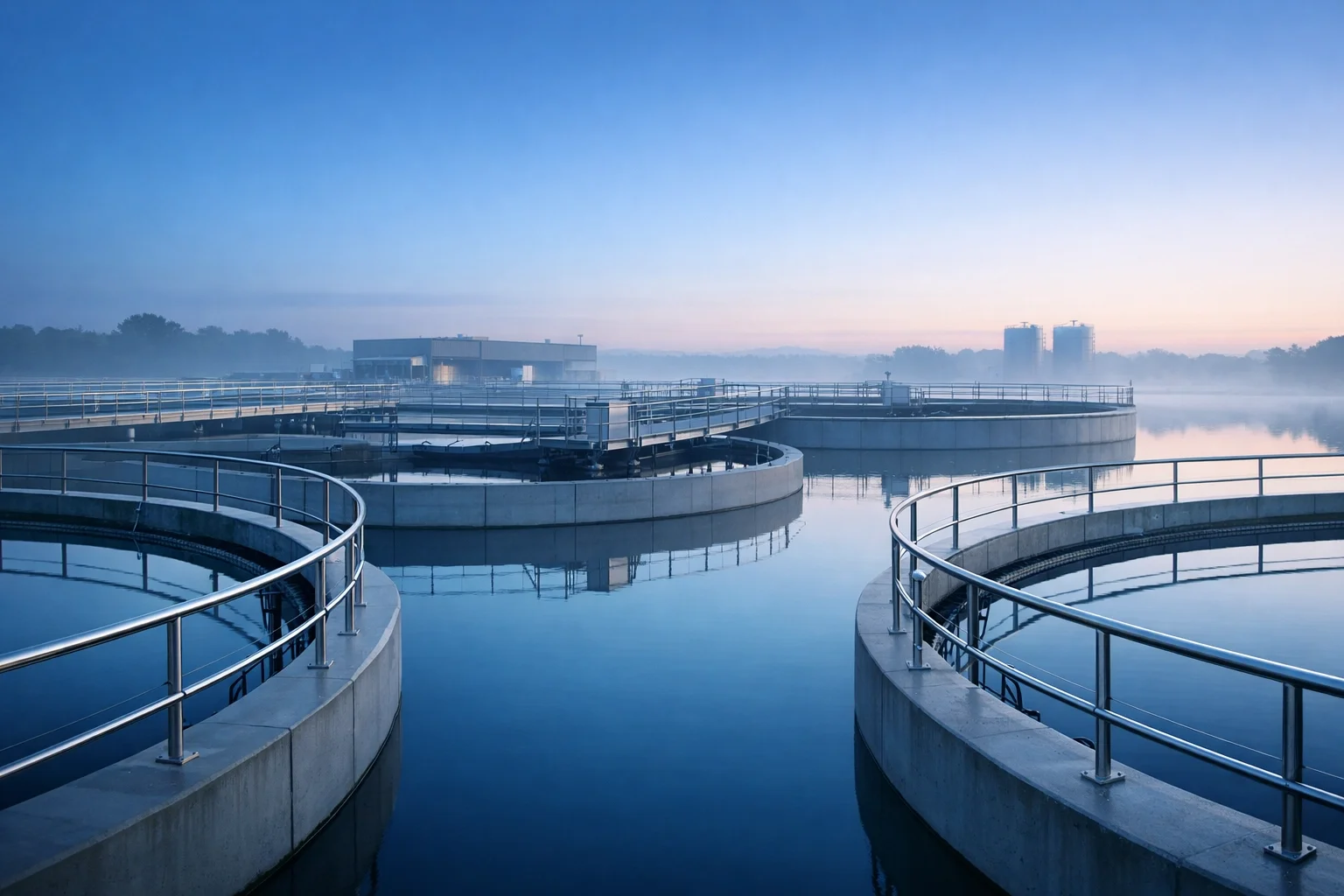
You can hear it before you see it: the steady, rhythmic humming of a pump station, the rush of water through a grit chamber, or the hiss of steam from a thermal hydrolysis system. These sounds are the heartbeat of our civilization. Yet, for most people, the infrastructure that keeps their taps running and their environment clean is invisible. It is a ghost in the machine, only noticed when the "heart" skips a beat or the "arteries" fail.
In the water and wastewater industry, we don’t have the luxury of invisibility. We know that every gallon treated and every pipe laid depends on a fragile ecosystem of human expertise. But right now, that ecosystem is facing a silent leak: a drain of talent and experience that threatens the very stability of our essential services. We aren't just looking for workers; we are looking for the stewards of our most precious resource.
The traditional way of hiring: tossing a generic job description onto a massive job board and hoping for the best: is no longer enough. To thrive in an era of rapid technological change and shifting demographics, companies must pivot. This is why dedicated water and wastewater recruiters are no longer just a "nice-to-have" option; they are the strategic partners who will fundamentally change how you build your future.
The Workforce Succession Crisis: More Than Just Retirements
For years, the industry has whispered about the "Silver Tsunami," but that term doesn't quite capture the gravity of what we are facing. At Hunter Crown, we prefer to call it the Workforce Succession Crisis. It isn't just a wave that passes; it’s a structural shift in the foundation of our labor force.
As the "brain" of our operations: the senior operators and engineers who have spent thirty years learning the quirks of a specific plant: walks out the door toward retirement, they take more than just their credentials with them. They take the institutional memory. They take the "gut feeling" that knows when a biological process is slightly off before the sensors even trigger an alarm.
This crisis is compounded by a historical "storytelling problem." For too long, we haven't done enough to show the next generation that water is a high-tech, high-impact career path. The water industry’s talent problem isn’t a shortage; it’s a storytelling problem. When you combine an aging workforce with a younger generation that doesn't yet see themselves in these roles, you get a vacuum.
A generalist recruiter, who might be hiring a software developer one day and a retail manager the next, simply cannot grasp the nuance of this crisis. They see a vacancy; we see a critical gap in a life-support system.
Why Generalist Recruiters Miss the Mark
Imagine trying to explain the complexities of PFAS remediation or the intricacies of a SCADA system overhaul to someone who thinks "wastewater" is just another word for "plumbing." It’s frustrating, time-consuming, and ultimately leads to poor results.
Generalist recruiters operate on volume. They are "resume pushers" who rely on keyword matching. If a resume says "Engineer" and "Water," they hit send. But in our world, a civil engineer focused on land development is a completely different creature than a process engineer who understands the chemical-free future of clean water treatment.
When you work with a specialized firm like Hunter Crown, the "translation" happens instantly. We speak the language of the industry because we live in it. We know the difference between a Class IV operator and a maintenance technician. We understand the regulatory "heat" coming from the EPA and how that changes the type of leadership you need at the executive level.
Generalists find candidates who are looking for jobs. We find the professionals who are doing the work: the passive candidates who aren't scouring LinkedIn but are busy solving the industry's toughest problems.
The Power of Specialization: Seeing the Invisible Talent
Industry specialization is the "eyes and ears" of a successful search. Because we focus exclusively on water and wastewater, our network isn't a list of names in a database; it’s a living, breathing community.
When a client comes to us with a need, we aren't starting from scratch. We have already spent years cultivating relationships with the very people they need. This allows us to provide specialized recruiting solutions that are faster and more accurate.
Consider the emergence of AI in our sector. From predictive maintenance to autonomous sensor networks, AI is the hidden ingredient powering the modern utility. Finding a candidate who understands both the "old school" mechanics of fluid dynamics and the "new school" digital twins is like finding a needle in a haystack. For a generalist, it’s impossible. For us, it’s Tuesday. We know who the innovators are because we’ve been tracking their careers for years.
A Relationship-Driven Approach to the Human Element
Recruiting is often treated like a transaction: a cold exchange of credentials for a paycheck. But at Hunter Crown, we believe it’s an art form rooted in relationships. We don't just look at what a candidate has done; we look at what they are capable of doing. We focus on hiring for capability, not just credentials.
Why does this matter? Because a resume is just a piece of paper: it’s a strategy, not a biography. If you only hire based on who has the exact number of years in a specific role, you miss out on the rising stars who have the grit, the curiosity, and the cultural fit to transform your organization.
Our relationship-driven approach means we act as an extension of your brand. We tell your story to candidates in a way that resonates with their career goals. We aren't just "selling" a job; we are inviting them to be part of a mission. In an industry where the work is often "packed" with stress and high stakes, finding someone who genuinely cares about the mission of clean water is the difference between a hire who lasts six months and one who leads for twenty years.
The Economics of the Right Hire: Calculating the ROI
There is a common misconception that using an executive search firm is an "extra" expense. In reality, the cost of a bad hire is what truly drains the budget. When you factor in the "vapor" of lost productivity, the cost of re-training, and the potential for operational errors, a poor hiring decision can cost an organization three to five times the position's annual salary.
Conversely, a top-tier candidate: the kind identified through a dedicated, specialized search: can deliver a return on investment that is massive. Whether it's an executive who streamlines operations to save millions in energy costs or an engineer who discovers a way to extend the life of a treatment plant, the right person is a force multiplier.
Specialized recruiters reduce the "time-to-fill" metric significantly. Every day a critical role sits empty is a day your team is stretched thin, increasing the risk of burnout and turnover. By delivering a pre-qualified shortlist of candidates who are not just "qualified" but "ideal," we ensure that your operations keep humming without interruption.
Thriving Through Resilience: A Call to Action
The water and wastewater industry is at a crossroads. We can continue to struggle with the traditional methods of hiring, feeling the pressure of the Workforce Succession Crisis as a weight that drags us down. Or, we can choose resilience.
Thriving in this new landscape requires a partner who understands that recruiting is the "lifeblood" of infrastructure. It requires a move away from the "job description" and toward a deeper understanding of human potential. The job description is not the job; the job is the impact that person will have on the community they serve.
As we look toward 2026 and beyond, the challenges of climate change, aging infrastructure, and shifting regulations will only grow. You need a team that is as dedicated to your mission as you are. You need a partner who sees the people behind the pipes.
Are you ready to change the way you hire? Are you ready to stop just "surviving" the talent shortage and start building a resilient, future-proof workforce? Let’s get to work.
Further Reading & Resources
The Future of Water Technology: How emerging tech is revolutionizing treatment
Career Strategy: Why your resume is a strategy, not a biography
Infrastructure Lessons: What we can learn from Iceland’s water systems
Candidate Experience: How to show confidence before the first question